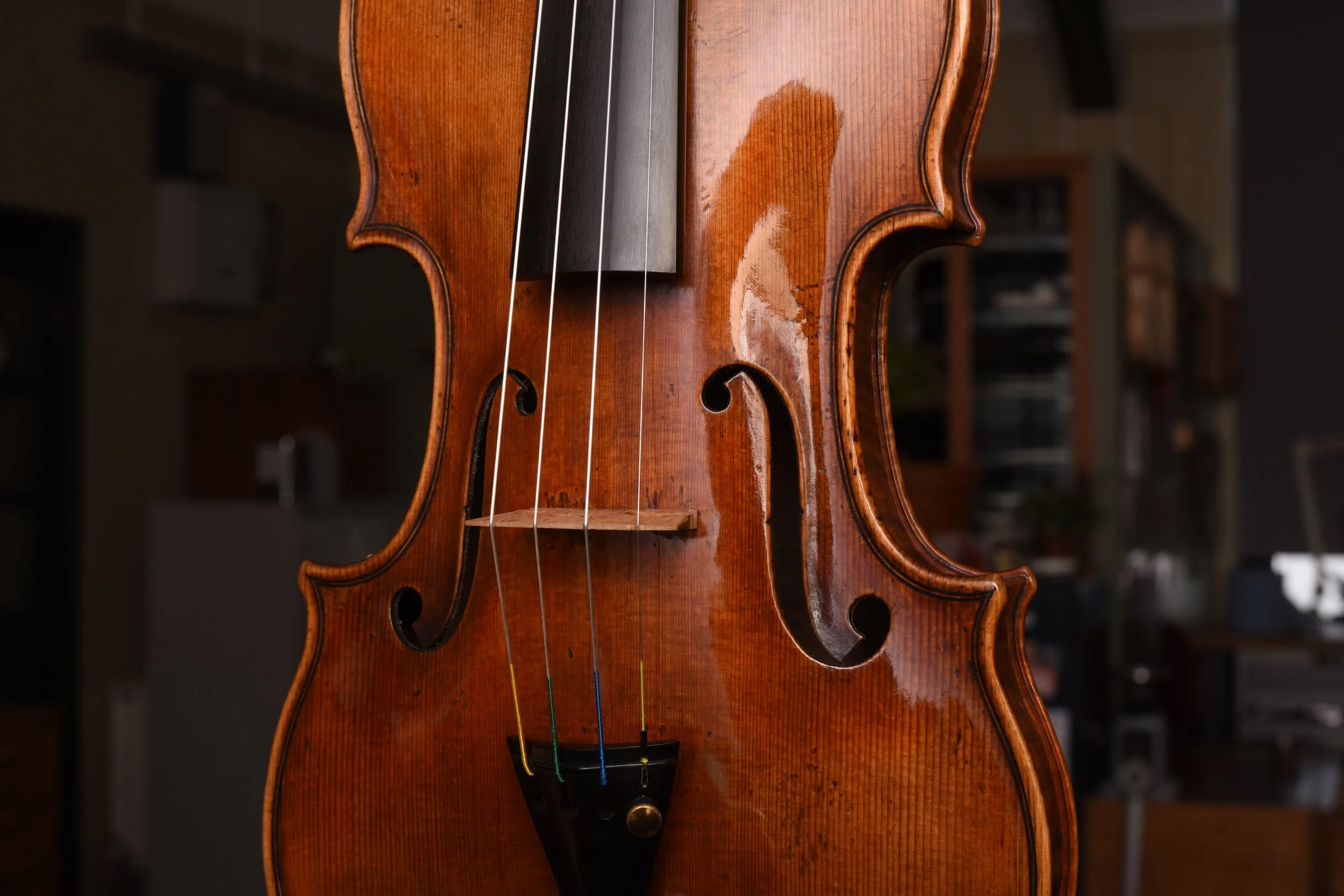
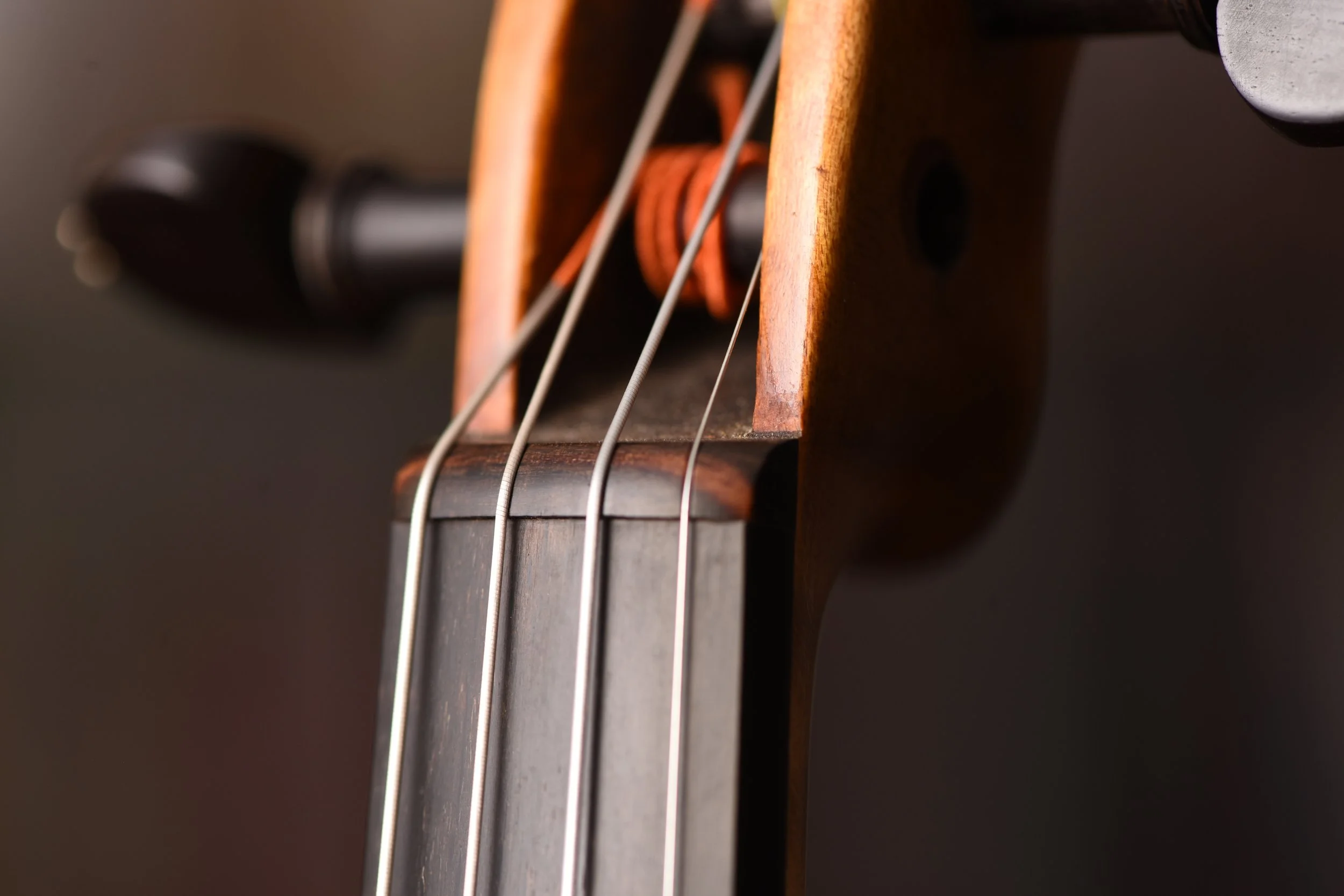
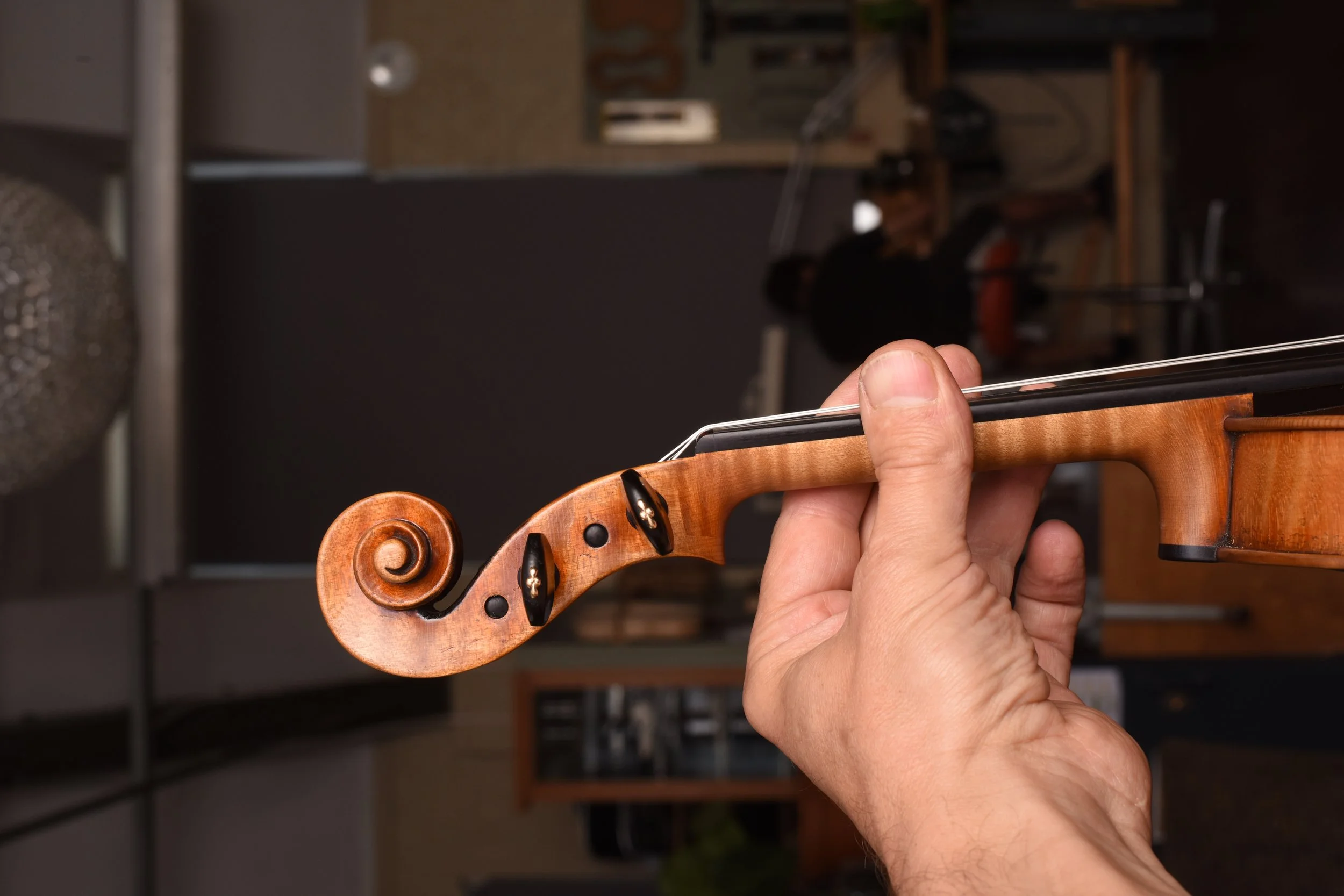
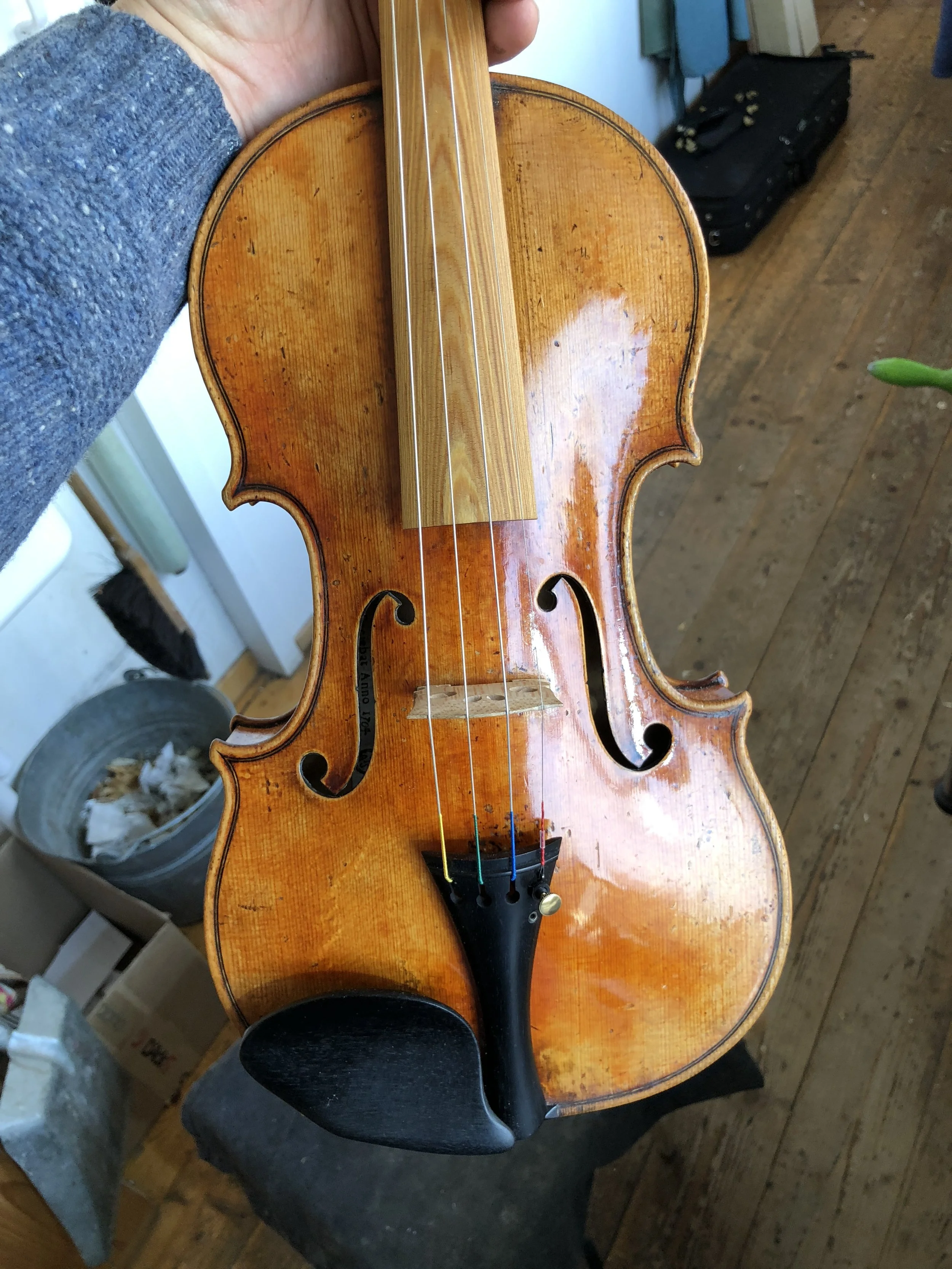
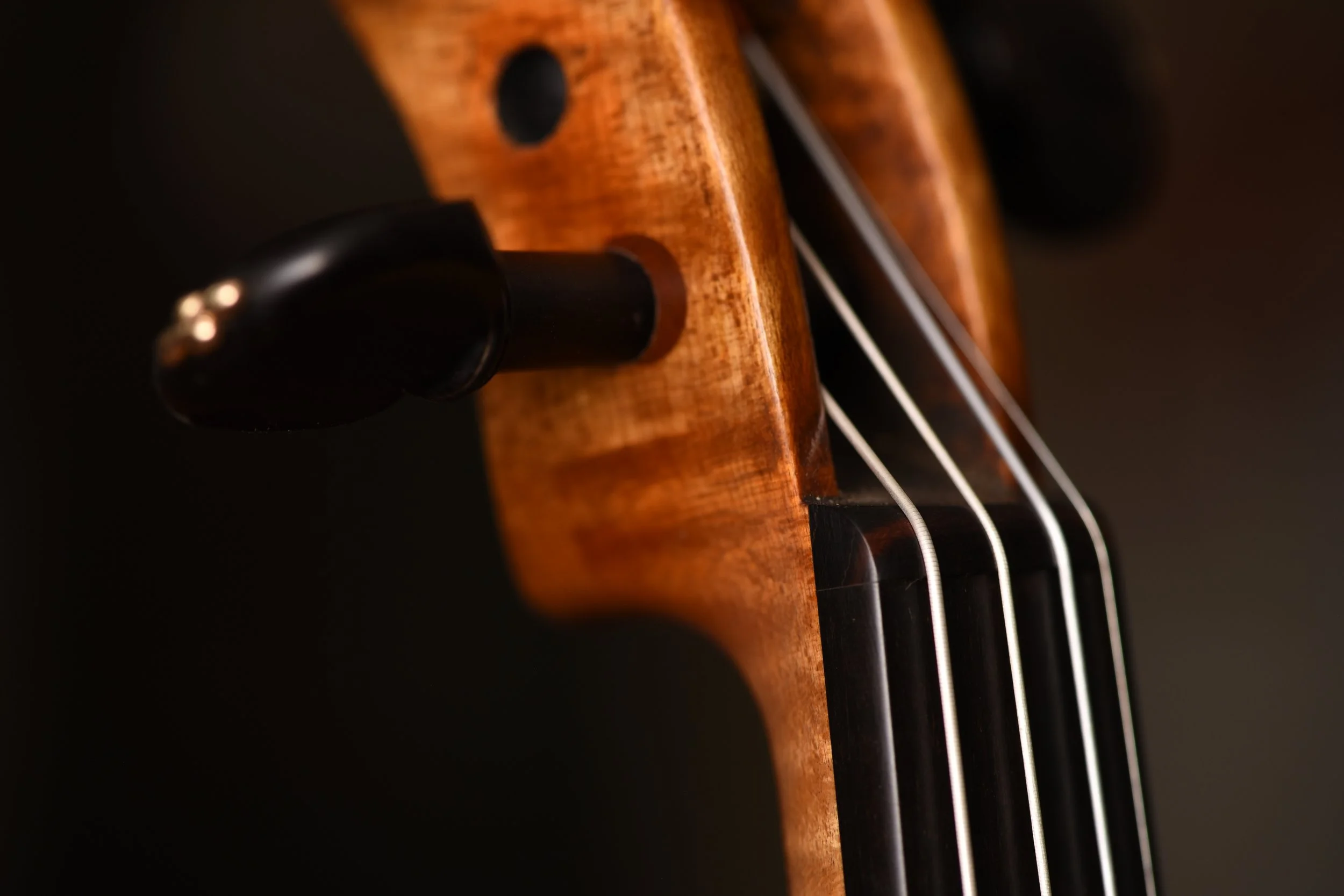
Beauty may happen in the dynamics of lines, in the tension between strength and fragility, in the shimmering game between light and shadow ... This is what I love about violin making.
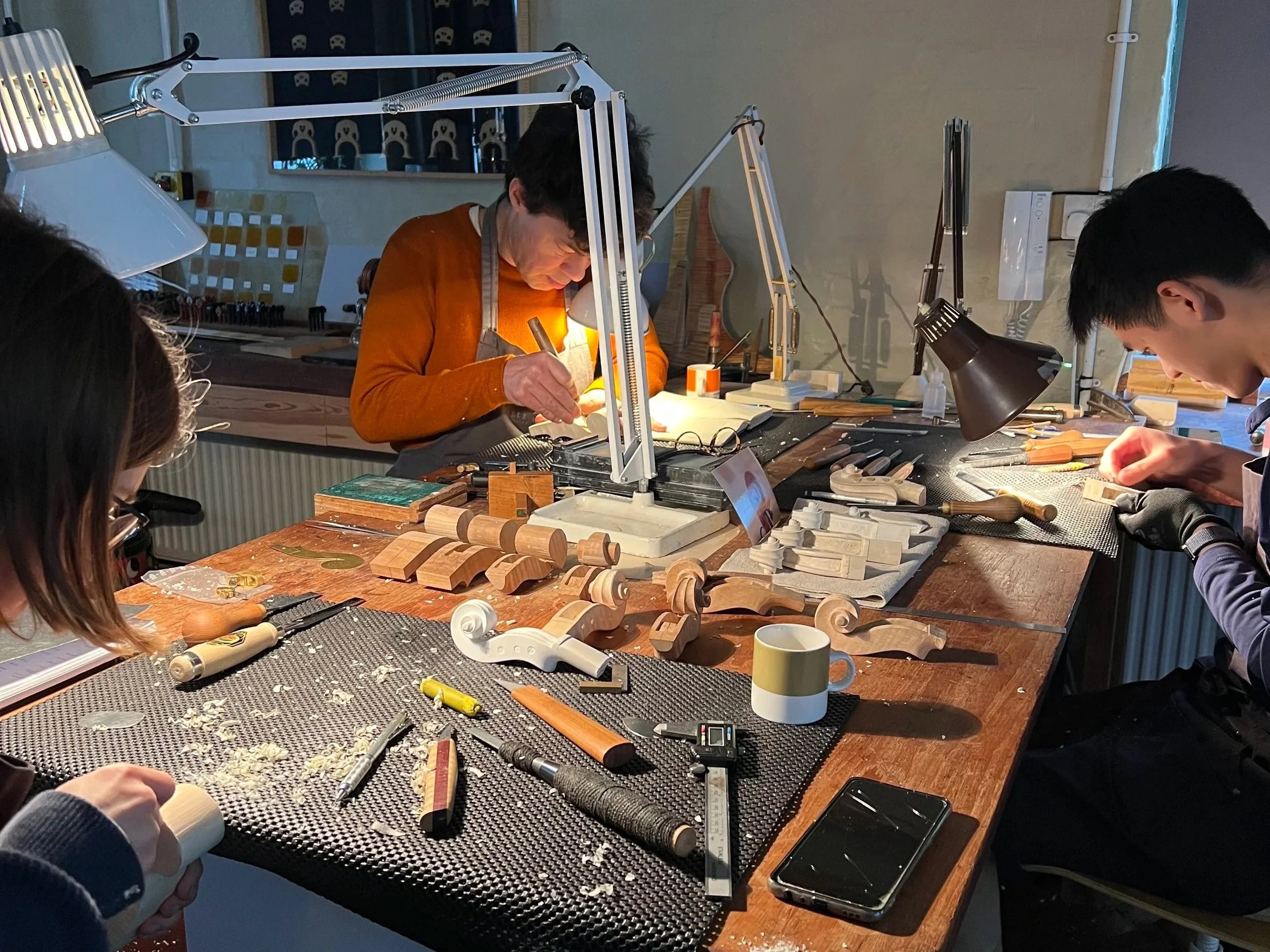
Last week, we had another scroll session: carving scrolls with low light and sitting close together around the central island. We have done that many times over the past five years - it’s a training session to improve flow in our craftsmanship. It’s not about the result, it’s about building skill and method. It started in Hassop road, when Gian and Mathieu were still working here, we had a few one day sessions carving Guarneri scrolls. In order to achieve the raw, confident Guarneri style, I set time limits and left some dimensional freedom. I am much stricter with method and choice of tools.
Previous scroll session with Chen-Han and Simona, February 2026, with casts…
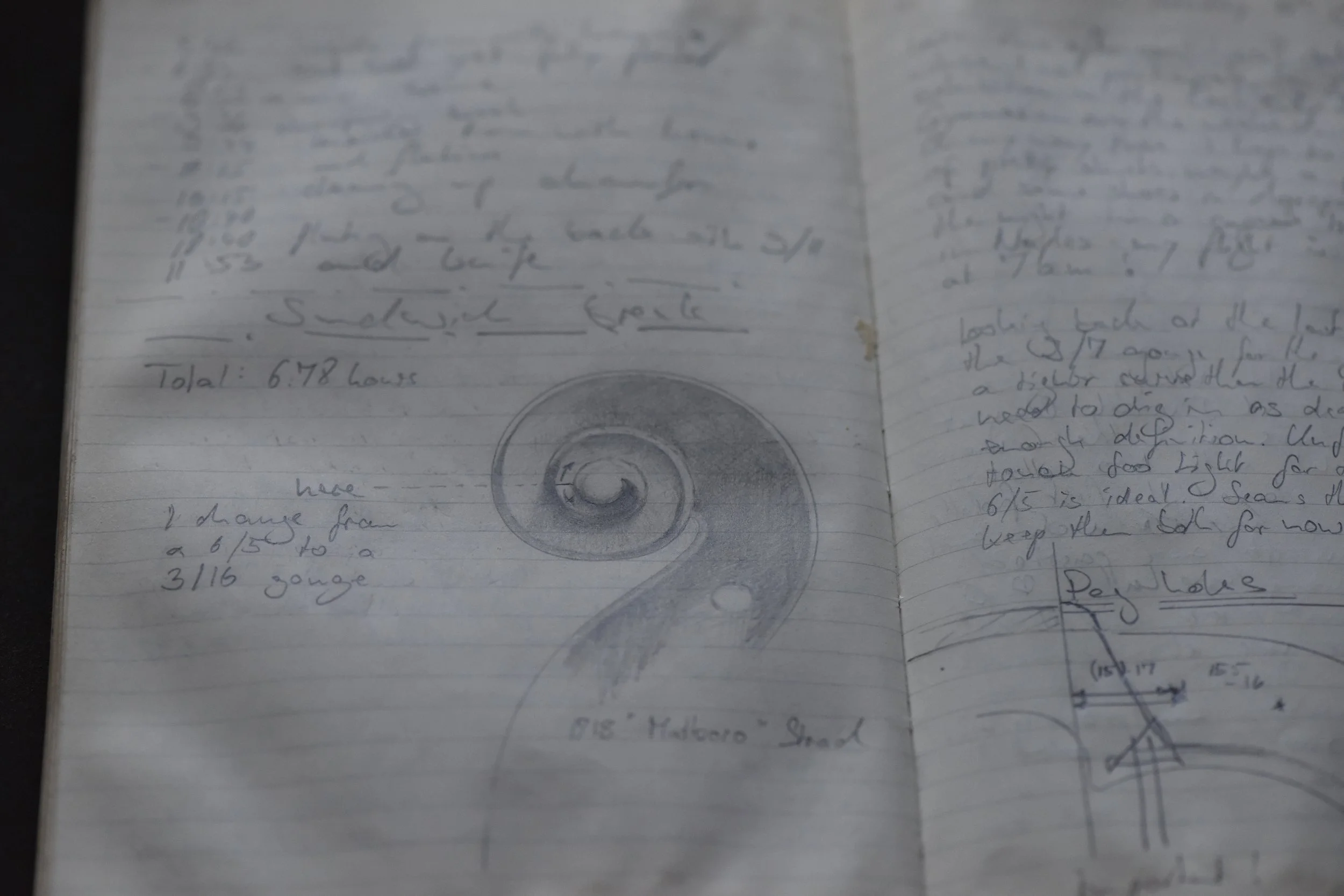
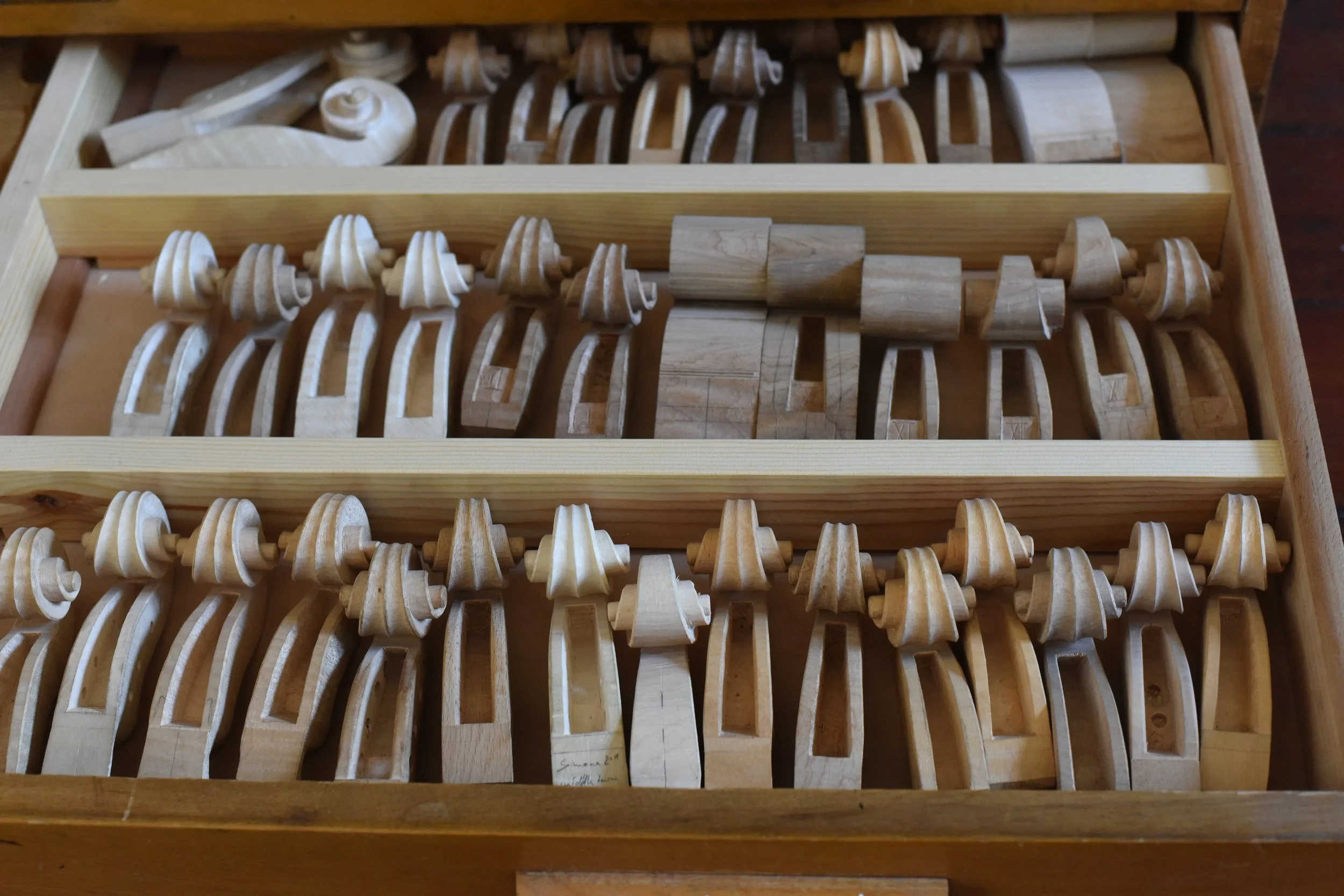
With the thicknesses, f-holes and bass bars done and the backs glued on, two DNA-Strad bodies - I’ll explain later what I mean by DNA - were coming together well and we needed to make some scrolls. I laid out the instructive set of scrolls each left at a step where a tool change was necessary and each tool for the relevant step. I carved it at the end of my scroll retreat in autumn 2024 after carving 15 scrolls in a row to grow my craft and polish my method. I found it very satisfying to separate steps and only use one tool for each step. The resulting scroll has a certain inevitability, something that says to me: This is how I am and I cannot be different. In a nutshell, this explains what I mean with DNA-Strad.
my notes from October 2024
Back to our workbench and last week: together with Jef and Chen-Han, we carved scrolls each with their distinct hand, but all following the same steps with the same tools. It was only on day two that I realised, that it was for the first time ever, that during a scroll session, we had no casts of original Cremonese scrolls on the workbench, and no photos either. That was a moment of joy, this is why I am writing this post!
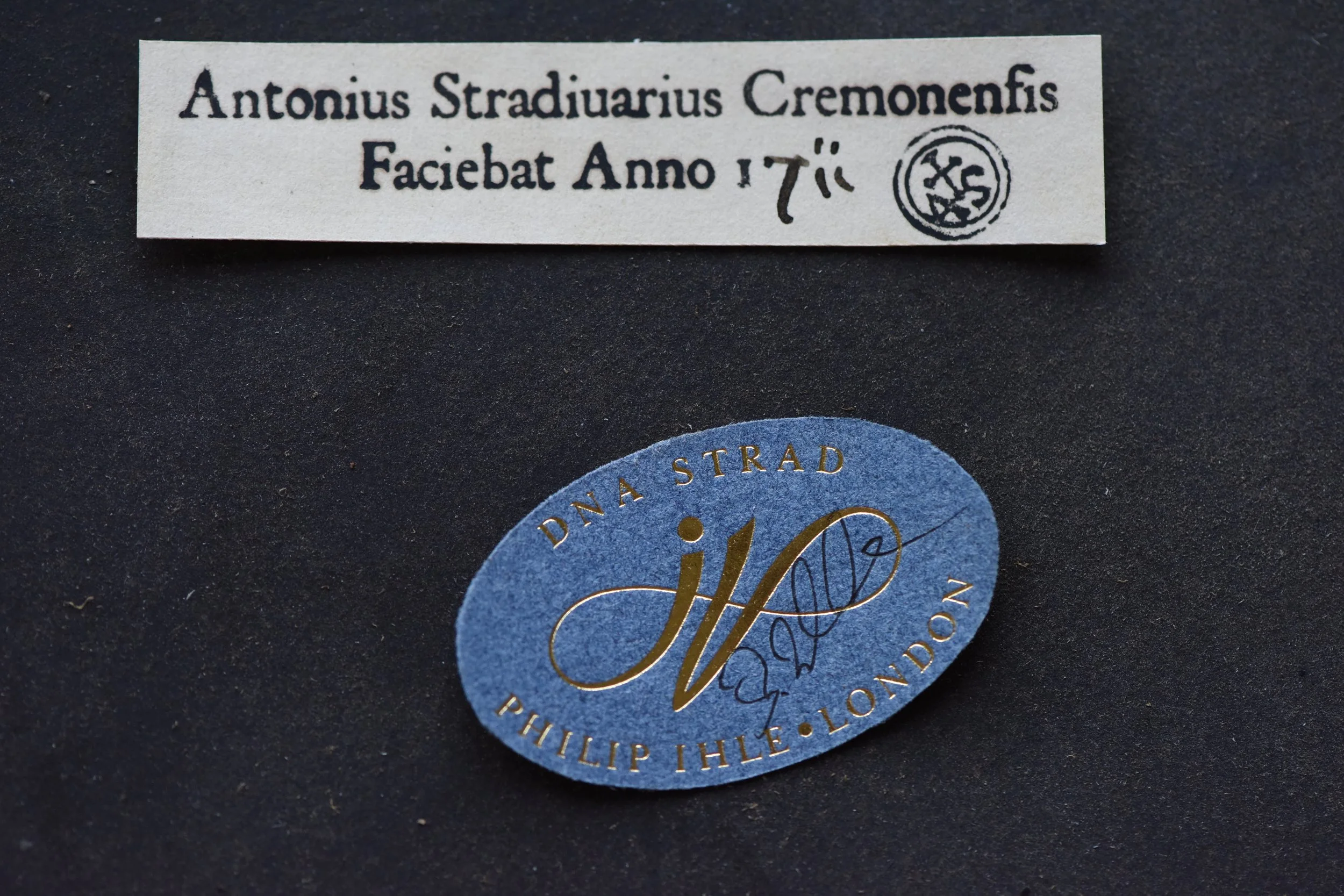
new label
At the end of the week, we had five beautiful Strad scrolls, each shows the hand of the maker, one being finer and lighter, one more bold and determined and they are clearly all from one strong craftsmanship tradition.
along the path to a strong craftsmanship tradition
Light and Darkness on a DNA-Strad, London 2026 with SonoWood Black fingerboard
I found a replacement material for ebony! It is densified and coloured beech wood called Sonowood Black.
The quality of the ebony we can buy today is not satisfying when comparing it to the much denser stuff where you hardly see any pores as we find it on some of the fine French instruments and bows from the 19th century. For sound reasons, I left my fingerboards made of the modern ebony very thick, because I found that a violin with a light fingerboard can lack in substance of sound. That works, but then the maple part of the neck becomes quite thin and that is not ideal for the long term health of the violin, since the neck wears down with playing and will need replacement sooner. Also, the grooves of the top nut need cleaning out with a needle file frequently, when the top nut material is not wear-resistant enough. We have a few pieces reclaimed from old fingerboards for that, but they are always in short supply.
Fingerboard and top nut in SonoWood Black
With the new Sonowood Black, I can achieve excellent acoustic results with a fingerboard thickness of 4.9mm on the sides, which leaves the neck with much healthier proportions. With a weight of around 73 grams, it still weighs about 5 grams more than my average ebony fingerboards.
In 2010, my former employer Mark Wilhelm started to look for alternatives when he heard a report by a team from the Zürich Zoo who filmed how some of the ebony was looted from the Masoala Nature Reserve in Madagascar. Together with some researchers at ETH Zürich, they began to develop alternatives: Musikinstrumente aus bedrohtem Holz - SRF
In 2018, a first non-tropical material that worked really well was ready: densified spruce. Wilhelm Geigenbau hosted a research conference where we compared all available materials - I reported on here. I really liked the properties of the densified spruce but its light colour did not work with my aesthetics. “Beauty in light and shadow” - I need every bit of darkness I can get to let the wood glow!
One of my violins with a densified spruce fingerboard - Suhr 2018
In the meantime, the ETH team has founded a spin-off and is producing various items out of densified wood ranging from credit cards to satellite components - the material is wood, 100% biodegradable. And, finally, they have also found a way to colour it black enough for my violins. They are still tinkering with different colouration processes, but I had two batches that are looking and working great!
The fingerboards come roughly pre routed. To finish and fit them to the violins, we use the same tools we work ebony with. That said, we do use the latest Veritas PM-V11 blade in our block planes, which handles it much better than softer steels. The playing surface comes routed to a very good profile and only needs sanding - a welcome shortcut. It polishes up like the best ebony ever.
It has the natural look and feel of wood, and lowers the maintenance of fingerboard and top nut a lot. After two batches, I am convinced. This is the material I’ll be using from now on.
When Philip first told me we had to move the workshop out of Hassop Road, my initial feeling was apprehension. I knew this would be a big task ahead and I really had very little experience of how to manage this - How does one go about finding a new workshop? How will we move everything? But it didn’t take long for the excitement at the prospect of a new chapter to creep in between the worry of the logistics.
Diving headfirst into the mission, we scoured the internet and every resource we could find. Some prospective options arose and we enjoyed visiting new spaces, but rather soon we fell deep into the goldilocks effect - ‘Too big’, ‘Too small’, ‘Too much work needed’ etc… Then one day, Philip suggested the possibility of moving back to the space he had rented previously, in Robert Blair School, and suddenly ‘Ah, just right!’
I joined the team only in Autumn 2020 so I was in the minority position of never having been to, nevertheless worked in this space. I had, however, always heard Philip and Mathieu reminiscing fondly of their time there and I was thrilled to also get to experience it. Having seen pictures of this large, light, and open space, I thought we had hit the jackpot, however of course it was not going to be so easy!
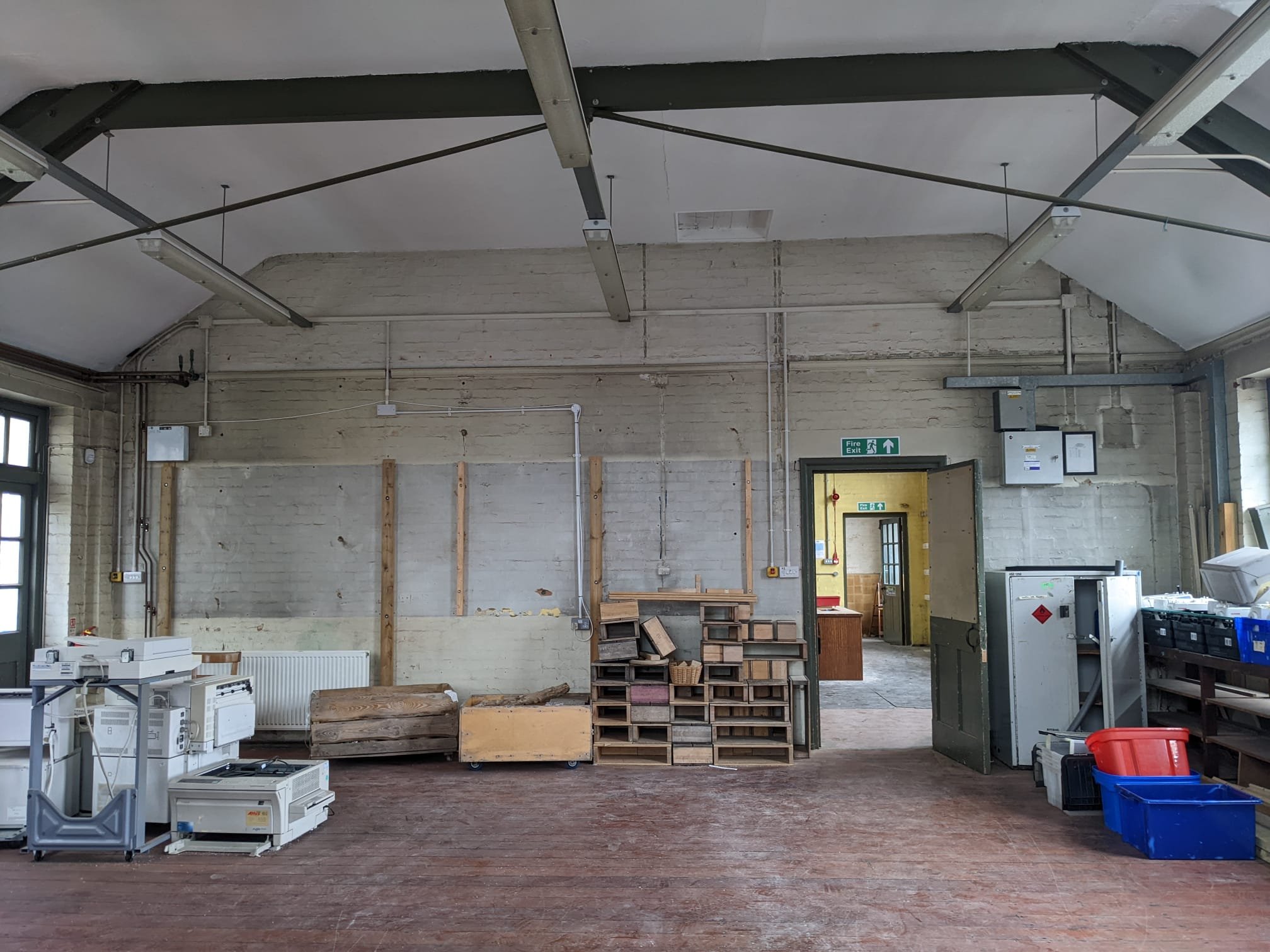
On our first visit, it was clear time and neglect had played their part and work was going to need to be done before we could make this the workshops home again…
Philip and Mathieu at the first viewing
But still the important and characterful details remained, such as the stunning wooden floorboards and large, imposing windows, not to mention the sheer abundance of space!
The main workshop before the move
After a few hard weeks of planning, cleaning, stripping, sanding, painting, and building, we were ready to move in.
Philip really focussed on making sure each item of furniture was in the perfect place for both practicality and aesthetics and I enjoyed this peek into the makers mindset, The duality of functionality and beauty! Each of the workbenches were thoughtfully placed, so they were both autonomous and yet integrated. I too have been given special consideration; the desk is perfectly positioned to overlook all three of the workbenches (to keep a special eye on everyone!), we each have our own space and role to play and yet most importantly we can each easily interact with one another.
Independently together - Photo by Marius
The most important aspect of the new workshop for me, however, is the acoustics for testing the instruments. A large structure can be difficult, as it can be too boomy. Whilst this can be fun to play in, it can also be deceptive, as it often makes it difficult to really hear the true sound of the instrument. I am pleased to report that this is not a problem here! The acoustic panelling and large wall of wood storage has created the perfect uneven surface to deal with reflected sound.
Philip and the wood storage - Photo by Marius
All that is left, is to add a few more final touches – one of which is this beautiful chair we all fell in love with at the first viewing. We took it to a local upholsterer here on Caledionian road, who transformed the old school chair to new heights with beautiful leather cushions.
locally upholstered chair
And just like that Robert Blair Studios has become the companies home again and it is fair to say we are all more than delighted. Perhaps the best analogy we have found is one Philip mentioned, so I shall steal it from him now; in this space you feel as though you are in the hull of a large ship, sailing on peacefully with the world passing by. I will leave you to enjoy a final picture our dear friend Marius took (Photographer with whom we shared the building on Hassop road and owner of Fav studios ) and an open invitation to visit us here anytime!